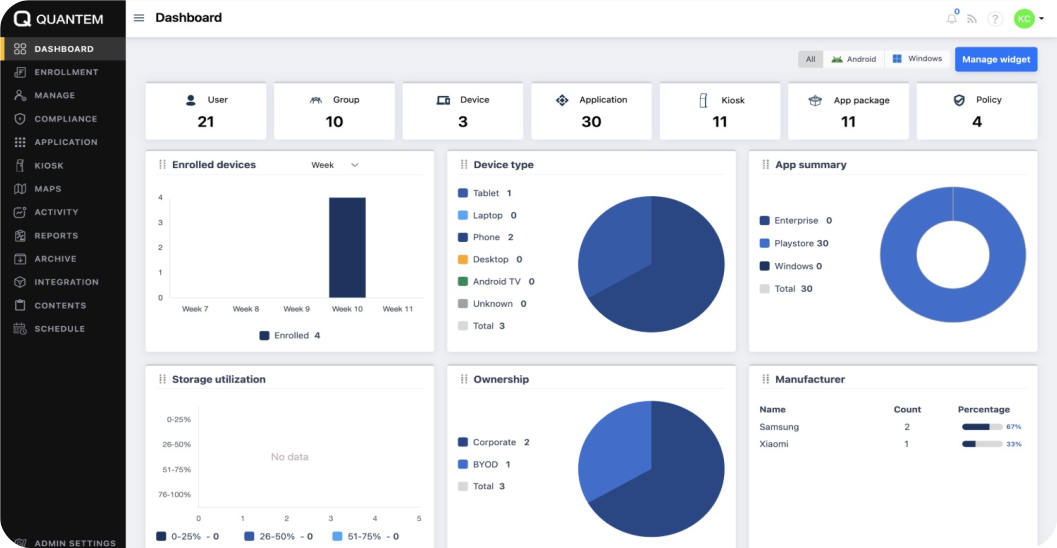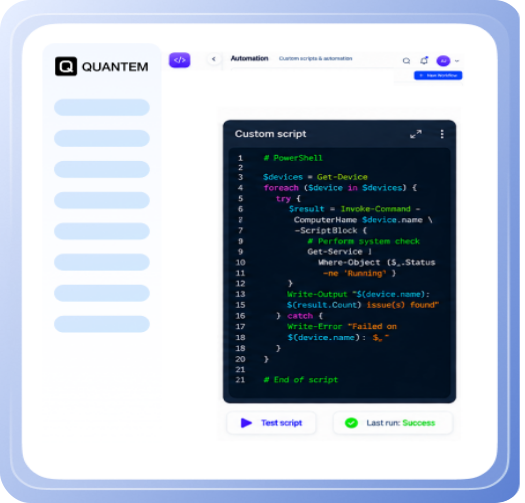
Manage, secure, and support every endpoint from a Unified Endpoint Management (UEM) solution. Quantem brings device management, monitoring, application deployment, and security enforcement together in one platform, giving IT teams complete control from a centralized dashboard.
Deploy devices faster with flexible enrollment methods that simplify provisioning across every operating system. Quantem UEM solution automatically applies security policies, configures settings, and installs required applications before devices reach end users, reducing manual effort and accelerating onboarding.



Support every use case and device ownership model with diverse endpoint
management modes using UEM software built for modern enterprises.
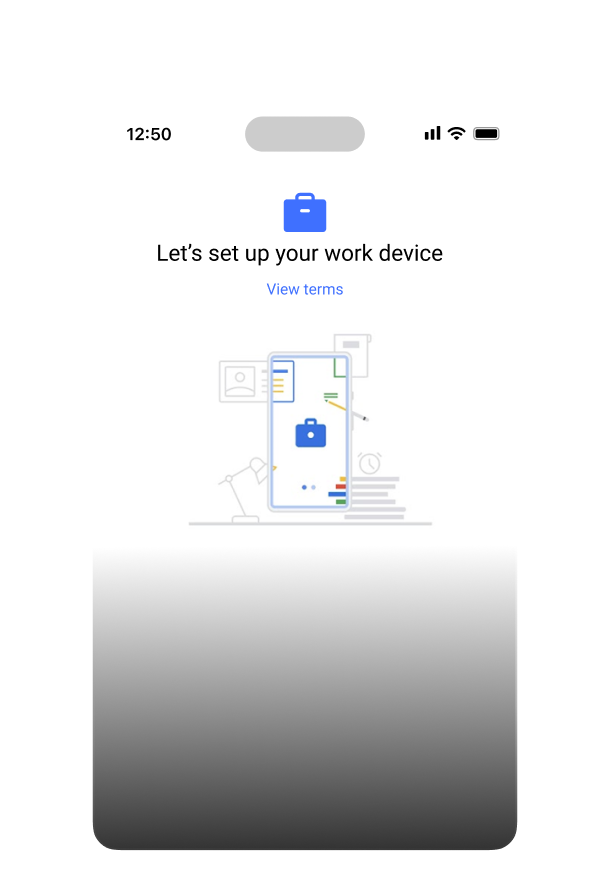
Manage corporate-owned devices with complete control over applications, configurations, and security policies. Remotely deploy updates, enforce compliance, and maintain a secure, standardized device fleet.
Secure business data on employee-owned devices without compromising personal privacy. Separate work and personal data with containerization while enforcing security policies on corporate resources.
Transform devices into single-app or multi-app kiosks for dedicated business use. Lock down unnecessary functions and deliver secure, purpose-built experiences for frontline teams, self-service kiosks, and digital signage.
Give employees the flexibility to use company-owned devices for personal tasks without compromising security. Keep work and personal data separated while applying organization-wide policies and compliance controls.
Manage every stage of the endpoint lifecycle, from enrollment to retirement, with Quantem UEM.

Manage and secure every endpoint, operating system, and device ownership model from a single platform built for modern enterprises.
Empower IT teams with a unified platform to manage devices, enforce security, deploy applications, and
maintain endpoints at scale.
Go beyond device management with UEM capabilities that simplify IT administration, strengthen security, and improve operational efficiency.
Empower IT teams with a Unified Endpoint Management solution built for simplified administration, stronger security, and effortless scalability.
Unified Endpoint Management (UEM) is a centralized platform that enables organizations to manage, secure, monitor, and support all enterprise endpoints from a single console. It unifies device management, application deployment, security policy enforcement, OS updates, and remote support across all endpoints and OS like Android, iOS, Windows, macOS, and Linux devices, helping IT teams simplify endpoint administration and strengthen security.
Mobile Device Management (MDM) focuses on securing and managing mobile devices such as smartphones and tablets. Unified Endpoint Management builds on MDM by extending management capabilities to laptops, desktops, rugged devices, kiosks, and other endpoints. This allows organizations to manage their entire device fleet through one centralized platform instead of using separate tools.
Enterprise Mobility Management (EMM) primarily focuses on managing mobile devices and applications. Unified Endpoint Management expands those capabilities by bringing laptops, desktops, rugged devices, kiosks, IoT devices, and other endpoints under the same management platform. This gives IT teams real-time visibility, consistent security policies, and simplified management across all devices.
A Unified Endpoint Management solution is ideal for organizations that manage multiple device types and operating systems. It helps IT administrators, security teams, and businesses of all sizes centralize endpoint management, enforce security policies, automate routine tasks, and support employees working from offices, remote locations, or in the field.
Most enterprise UEM platforms support major operating systems, including Android, iOS, Windows, macOS, and Linux. This enables organizations to manage smartphones, tablets, laptops, desktops, rugged devices, kiosks, and other enterprise endpoints from one console
Unified Endpoint Management solutions help organizations manage the complete endpoint lifecycle across diverse business environments. Common use cases include remote work, BYOD, company-owned devices, kiosks, and multi-location deployments. Key features include device enrollment, mobile app management, OS and patch management, policy enforcement, automation, remote support, compliance management, location tracking, and remote lock and wipe capabilities.
When choosing a Unified Endpoint Management tool, look for support for all the operating systems your organization uses, flexible enrollment options, centralized policy management, application deployment, automation, remote support, and enterprise-grade security features. A scalable UEM solution should also integrate with your existing IT ecosystem and adapt to your device ownership models, whether company-owned, BYOD, COPE, or kiosks.
Endpoint management tools focus on provisioning, configuring, monitoring, updating, and maintaining end-user devices throughout their lifecycle. Endpoint security tools focuses on zero trust by protecting devices from cyber security threats through controls like endpoint detection and response (EDR), encryption, data protection, threat detection, and access management.