What is Android Fastboot Mode? Everything You Should Know
As Android evolved into the most widely used mobile operating system, tools like Android Fastboot became essential for developers, device manufacturers, and technicians who need to work beyond the regular Android interface. Fastboot allows them to communicate with a device at the bootloader level, making it possible to flash firmware, modify system partitions, unlock bootloaders, and recover devices that are having software issues.
One of Android's biggest strengths is its flexibility. Users can customize devices, developers can test different system configurations, and organizations can manage devices for specific business requirements. Android Fastboot is one of the tools that makes this deeper level of control possible.
Although Fastboot is commonly associated with developers and device manufacturers, it also has practical uses for Android device management and troubleshooting. It can help technicians install system images, recover devices stuck in boot loops, and restore software when normal Android tools are no longer enough.
So, what exactly is Android Fastboot Mode, how does it work, and what can you actually do with it? Let's take a closer look at Fastboot, its capabilities, common uses, and why it matters when managing and maintaining Android devices.
What is Android Fastboot Mode?
Android Fastboot Mode is a bootloader-level mode that lets a computer communicate with an Android device before the main operating system starts. It provides a low-level interface between the connected computer and the device's bootloader, allowing communication with certain system components without relying on the normal Android interface.
Unlike Android, which runs after the device completes its boot process, Fastboot operates at an earlier stage of startup. This makes it a separate bootloader environment rather than a feature within the regular Android operating system.
Why Do Corporate IT Teams Need Android Fastboot?
A device is only useful when its software works properly. But what happens when a system update goes wrong, important system files become corrupted, or an Android phone gets stuck in a boot loop and refuses to start?
When the usual Android settings, recovery options, or factory reset cannot solve the problem, IT technicians need a way to work with the device before Android loads. This is where Android Fastboot becomes useful.
Fastboot operates at the bootloader level, allowing technicians to communicate with the device even when the main Android operating system is not running normally. Think of it as accessing the device's underlying startup layer when the regular Android interface is no longer available.
For IT teams, this can provide another way to diagnose software problems, restore device functionality, and work with system-level components without immediately replacing a malfunctioning device.
Core Capabilities: What Can Android Fastboot Actually Do?
Android Fastboot provides access to the device at the bootloader level, giving technicians more control than the regular Android interface. Its capabilities mainly cover system software, bootloader settings, device information, and recovery operations.
Here is a closer look at the core capabilities of Android Fastboot, grouped by what technicians and developers can do with the tool.
1. Partition Management and Firmware Flashing
One of Fastboot's primary functions is flashing, which means writing system images or supported files to specific device partitions.
- Flash individual partitions: Target supported partitions, such as boot or system, without modifying the entire device.
- Restore factory software: Use factory image packages to reinstall the original device software.
- Erase supported partitions: Clear specific partitions when a clean software state is required.
2. Bootloader and Security Control
The bootloader controls which software an Android device can load, while Fastboot provides commands to manage its state on supported devices.
- Unlock the bootloader: Allow authorized development or software modification on supported devices.
- Relock the bootloader: Secure the device again after required changes are completed.
- Check bootloader status: Verify whether the bootloader is locked or unlocked.
- Maintain verified software: Relocking can restore a more secure configuration, depending on the device and software setup.
3. Device Information and Diagnostics
Because Fastboot communicates directly with the bootloader, it can provide information that helps technicians understand the device's current configuration.
- Retrieve device variables: View information exposed by the bootloader.
- Check bootloader status: Verify the current lock state.
- Review device configuration: Check details such as active slots on supported devices.
- Support troubleshooting: Use this information to determine the device's state before recovery or software operations.
4. Temporary Booting for Testing
Fastboot can temporarily boot a supported image without permanently flashing it to the device. This is useful for testing software before making permanent changes.
- Test system images: Evaluate a supported image without immediately installing it.
- Test recovery images: Support certain recovery and troubleshooting workflows.
- Test development builds: Evaluate kernels or system components before installation.
- Limit permanent changes: Test software without immediately overwriting the existing image.
Together, these capabilities make Android Fastboot useful for firmware maintenance, bootloader management, diagnostics, testing, and device recovery. The available commands and operations can vary depending on the device, manufacturer, Android version, and bootloader configuration.
Business Benefits of Android Fastboot
Using Fastboot IT teams can access device software at a level that the regular Android interface cannot provide. This can be particularly valuable when devices need firmware maintenance, recovery, or deeper troubleshooting.
1. Install Firmware and Software Updates Manually
Fastboot allows technicians to manually install custom ROM or supported Android firmware and system images when a normal over-the-air (OTA) update is unavailable or fails. This can help restore devices or bring them to the required software version.
2. Restore Devices With Software Problems
When corrupted system files or a failed update prevent Android from starting normally, Fastboot can help reinstall the required software. This can provide a way to recover a malfunctioning device without immediately replacing the hardware.
3. Support Custom Android Configurations
On supported devices, Fastboot can be used to install custom Android builds or other system images. Developers and technical teams can use this capability to test or deploy software configurations beyond the manufacturer's default setup.
4. Improve Device Performance With Custom Software
Some custom Android builds are optimized for specific performance requirements, resource usage, or battery efficiency. Fastboot can provide the mechanism for installing these builds on compatible devices.
5. Remove Unnecessary System Software
Fastboot can be used as part of advanced device modification workflows to replace or alter system software. This may help technical users create a cleaner software configuration, although available options depend heavily on the device and its bootloader.
6. Customize the Android Experience
Fastboot gives developers and advanced users deeper control over supported system components. This can enable changes to system images, boot components, and other software elements that cannot normally be modified through Android settings.
7. Recover Devices Stuck in Boot Loops
A device that repeatedly restarts or fails to load Android can sometimes be recovered by flashing the appropriate firmware or system components through Fastboot. This makes it a useful tool for deeper software troubleshooting.
How to Enter Fastboot Mode on Android?
You can enter Android Fastboot Mode in two common ways: using the device's physical buttons or by restarting the device into the bootloader from a computer with ADB. The exact button combination can vary by device manufacturer and model.
Method 1: Using the Hardware Buttons
This is the most common way to enter Fastboot Mode when you cannot access Android normally.
- Turn off the device completely.
Power off the Android device and wait until the screen goes completely dark. - Press the required button combination.
With the device powered off, press and hold the button combination used by your device to access the bootloader. Common combinations include:- Power + Volume Down
- Power + Volume Up
- Power + Volume Up + Volume Down
- Release the buttons when the Fastboot screen appears.
Depending on the device, you may see a bootloader screen, an Android logo, or a Fastboot indicator.
Note: There is no universal Fastboot key combination for every Android device. Check your device manufacturer's documentation for the correct method.
Method 2: Using ADB From a Computer
If the Android device is powered on and USB debugging is enabled, you can restart it into Fastboot Mode using ADB.
- Connect the Android device to your computer using a USB cable.
- Open Command Prompt or Terminal on your computer.
- Enter the following command:
adb reboot bootloader - Press Enter. The device should restart and enter its bootloader/Fastboot interface.
How to Exit Fastboot Mode on Android?
If your Android device is stuck in Fastboot Mode, you can usually exit it by restarting the device. The exact method may vary slightly depending on the manufacturer.
Method 1: Use the Power Button
Press and hold the Power button for about 10–15 seconds. The device should restart and attempt to boot into Android normally.
Method 2: Use the Fastboot Reboot Command
If the device is connected to a computer and recognized by Fastboot:
- Open Command Prompt or Terminal.
- Enter:
fastboot reboot - Press Enter.
The device should restart and exit Fastboot Mode.
If the device repeatedly returns to Fastboot Mode after restarting, there may be an underlying software or boot issue that needs further troubleshooting.
Android Fastboot Vulnerability: A Loophole in Enterprise Device Security
Android Fastboot is useful for low-level device recovery and maintenance, but its access to the bootloader can also create a security concern when someone has physical access to an unmanaged device.
If a lost or stolen Android device can be placed into Fastboot Mode, an unauthorized person may be able to perform low-level operations such as erasing supported partitions or modifying device software. These actions happen below the normal Android interface, meaning security controls that run inside Android may not be able to prevent them.
For enterprise devices, this creates three key concerns:
- Physical access: An attacker with the device in hand may be able to enter its bootloader interface.
- Data erasure: Fastboot operations can potentially erase user data and other supported partitions.
- OS-level limitations: Security applications and policies running within Android cannot necessarily control what happens before the operating system loads.
This does not mean Fastboot itself is a vulnerability. The security gap comes from combining low-level bootloader access with unrestricted physical access to a device. Proper bootloader controls, device security policies, and centralized management are therefore important for organizations managing Android fleets.
How Mobile Device Management Secures the Bootloader Layer?
Fastboot operates below the Android operating system, so organizations need controls that can limit what users can do with the device before Android fully loads. Mobile Device Management (MDM) adds centralized controls that help reduce the security risks associated with low-level device access.
1. Control USB and Developer Access
IT administrators can use device policies to restrict USB debugging, developer options, and bootloader-related settings where supported. Limiting these access points reduces the ability to use a connected computer for unauthorized device modifications.
2. Enforce Bootloader Restrictions
MDM policies can help prevent users from enabling or changing bootloader settings on supported Android devices. Keeping the bootloader in an appropriate locked state can help ensure that only authorized software is allowed to run.
3. Maintain Protection After a Device Reset
An MDM solution can work alongside Factory Reset Protection (FRP) to help maintain device ownership after a reset. If an unauthorized person wipes a managed device through a low-level method, FRP can require authorized account verification before the device can be activated again.
4. Restore Management After Device Recovery
Android devices can be provisioned with management configurations that allow them to return to organizational control after being reset and brought back online. This helps IT teams maintain oversight even when a device has undergone significant software changes.
Together, these controls help organizations address the gap between Android's operating-system-level security and the lower-level access provided by Fastboot.
Secure and Manage Your Enterprise Android Devices with Quantem MDM
Android Fastboot is a valuable low-level tool for developers and technicians, but it operates locally and depends on physical access to the device. Quantem MDM provides centralized management and security controls that help organizations maintain control over corporate-owned Android devices.
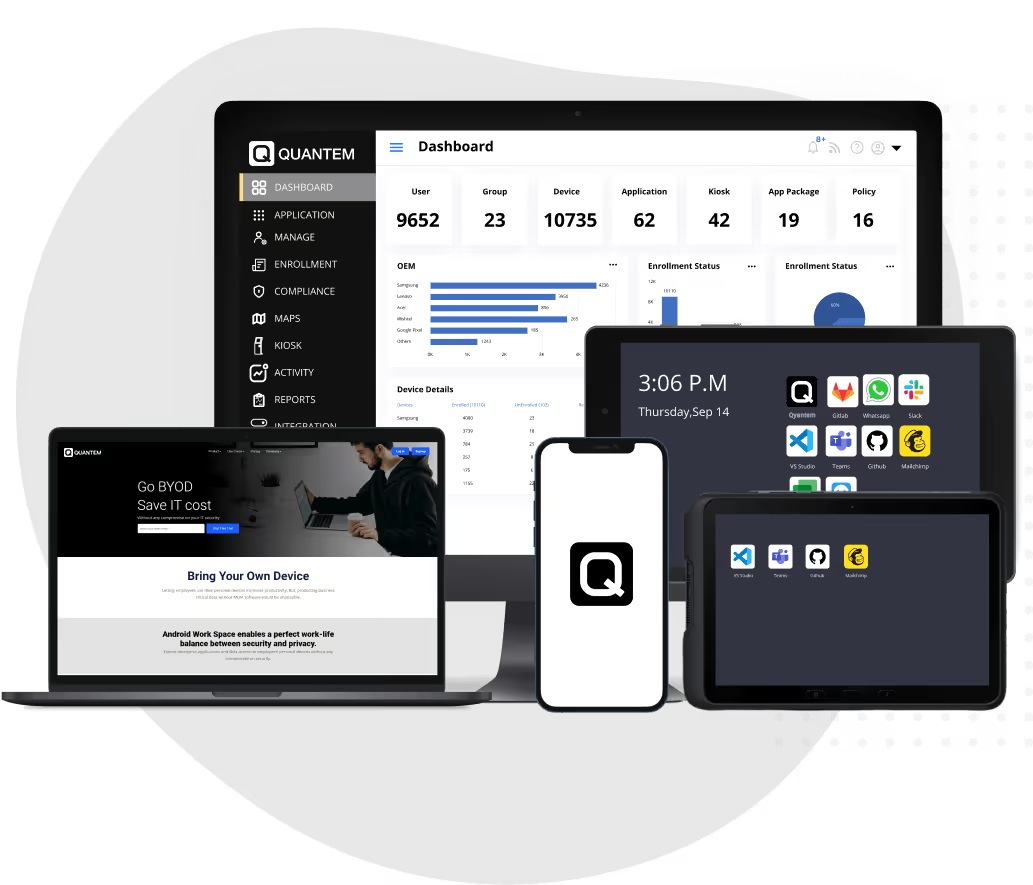
With Quantem, IT teams can manage device security and configurations from a central dashboard while reducing the risks associated with unauthorized device access.
- Centralized Device Management: Manage Android devices, policies, applications, and configurations from one platform.
- Security Policy Enforcement: Apply restrictions and controls that help prevent unauthorized changes to managed devices.
- FRP Management: Use Factory Reset Protection controls to help maintain ownership of corporate devices after a reset.
- Remote Device Control: Monitor and manage devices remotely without requiring physical access for every administrative task.
- Device Recovery: Help bring recovered or reset devices back under organizational management through centralized provisioning and configuration.
Fastboot remains useful when technicians need low-level access to troubleshoot or recover an Android device. However, centralized MDM gives IT teams a broader layer of control over the devices they manage, helping ensure that physical access or a device reset does not mean losing organizational control.
Secure your enterprise Android devices with Quantem MDM.
FAQs
1. How Do I Use Android Fastboot to Unlock a Device?
First, enter Fastboot Mode and connect the device to a computer with the required Android tools installed. On supported devices, Fastboot commands can be used to unlock the bootloader. The exact process can vary by OEM and device model. Unlocking the bootloader may also erase device data and affect certain security features, so check the manufacturer's requirements before proceeding.
2. How Does an Android Device Management Solution Prevent Fastboot Misuse?
An Android device management solution can restrict settings such as USB debugging, developer options, and bootloader access. This helps prevent unauthorized Fastboot actions and maintain control over managed devices.
3. Can I Install a Custom Android OS Using Android Fastboot?
Yes. Android Fastboot can be used to install a custom Android OS or ROM on supported devices. Depending on the device, you may also be able to test or boot a custom recovery for advanced troubleshooting. The required bootloader and software conditions vary by manufacturer and model.
4. What Should I Do If My Device Gets Stuck in Fastboot Mode?
Try holding the Power button until the device restarts. If the device is connected to a computer and recognized by Fastboot, you can also use the fastboot reboot command. If it repeatedly returns to Fastboot Mode, there may be an underlying software or boot issue that needs further troubleshooting.
5. Is it Safe to Use Fastboot Mode?
Yes, Fastboot Mode is safe when used correctly, but it provides low-level access to the device. Using an incorrect command or flashing an incompatible image can erase data or cause software problems. Always use the correct files and follow instructions specific to your device and OEM.



Get the latest blogs directly delivered to your mail fly arrow

.png)